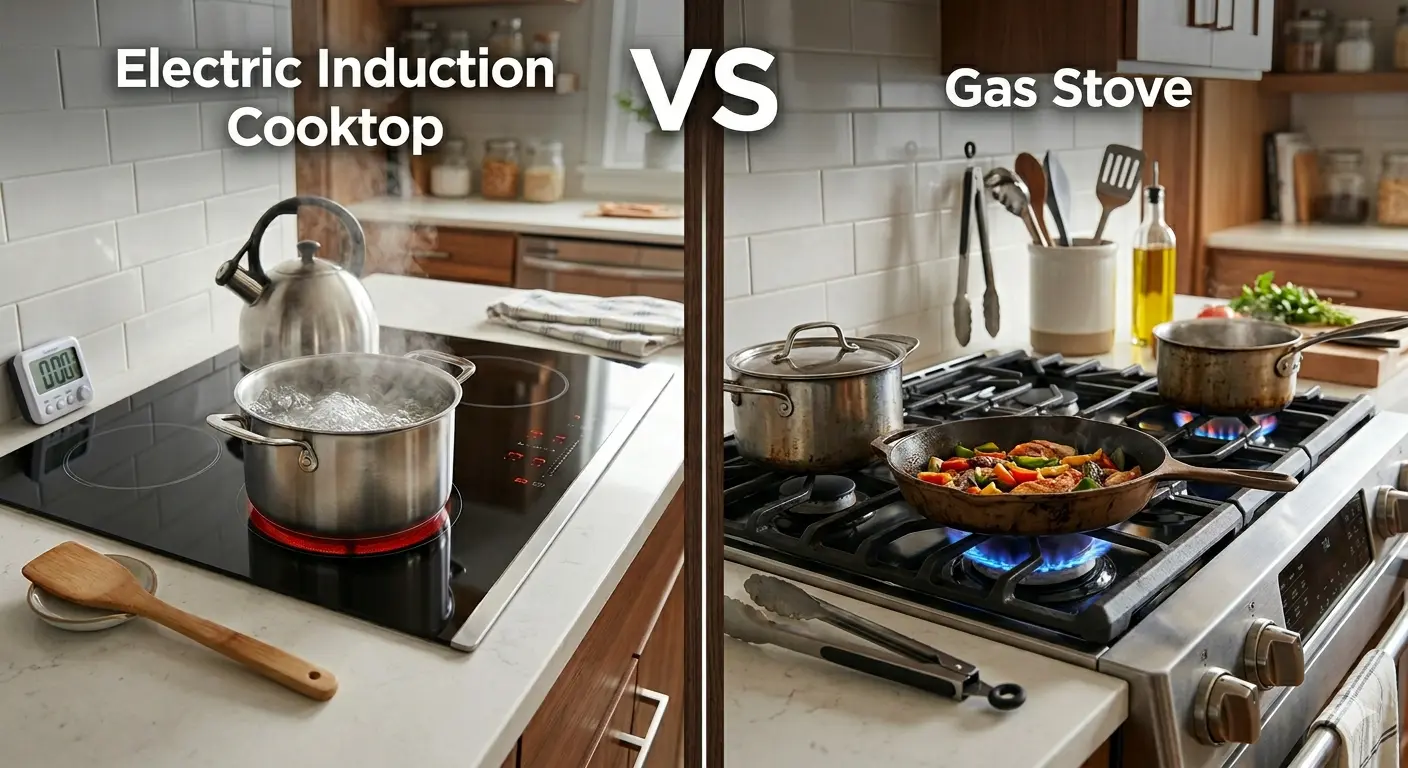
Electric Induction Cooktop vs Gas Stove: Which One Actually Wins in the Modern Kitchen?
If you’ve been standing in the kitchen appliance aisle — or scrolling endlessly through product reviews at midnight — trying to decide between an electric induction cooktop and a gas stove, you’re not alone. It’s one of the most debated questions in home cooking circles today, and for good reason. Both options have genuinely passionate supporters, real advantages, and a few honest drawbacks that nobody in a product brochure will tell you about.
This guide cuts through the noise. Whether you’re outfitting a new home, renovating a kitchen, or simply tired of your old stove, by the time you finish reading this, you’ll have a clear, evidence-informed picture of which cooking technology actually suits your lifestyle — not just which one looks better in a glossy catalogue.
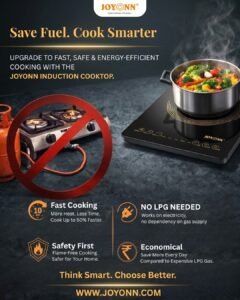
What Is an Electric Induction Cooktop, and How Does It Work?
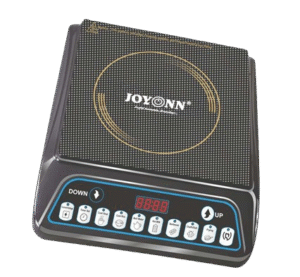
An electric induction cooktop is a cooking surface that uses electromagnetic energy to heat cookware directly, rather than heating a burner or coil that then transfers heat to the pot. Beneath each cooking zone sits a copper coil. When you switch it on, an alternating current flows through that coil and creates a magnetic field. Place a compatible pan on the surface, and the magnetic field induces an electrical current in the pan itself — which is what generates heat.
The practical effect of this is significant: the cooktop surface doesn’t get hot on its own. Only the pan heats up. Touch the glass surface next to a boiling pot and you’ll feel barely any warmth. It’s a fundamentally different way of cooking compared to gas, and it has downstream implications for everything from energy bills to how your kitchen smells.
Gas stoves, by contrast, use combustion. Natural gas or LPG burns at the burner, producing a flame that heats the pan through direct contact and radiant heat. It’s the technology most home cooks grew up with, and there’s real comfort in that familiarity.
Induction vs Gas: Efficiency, Safety, and Environmental Impact
Energy Efficiency
This is where the electric induction cooktop pulls ahead with no real contest. Induction cooking converts roughly 85–90% of its electrical energy into heat in the pan. Gas stoves, even good ones, operate at around 40–55% efficiency — the rest of the energy escapes as ambient heat into your kitchen. That means on a hot summer day, your gas stove is also quietly working against your air conditioner.
The U.S. Department of Energy and similar bodies in the UK and India have consistently highlighted induction as the more energy-efficient choice for household cooking. Over a year of daily cooking, that efficiency difference translates into a measurable reduction in energy consumption.
Safety
Induction wins here too, though the story is a little more nuanced. Because the cooktop surface itself doesn’t generate heat, the risk of accidentally burning yourself by touching the hob is dramatically reduced. There’s no open flame, which matters in homes with young children or elderly residents. And there’s no combustion happening, so there’s no carbon monoxide risk.
Gas stoves carry genuine risks: gas leaks (even small ones), the hazard of an open flame near loose clothing or kitchen towels, and indoor air quality concerns. A 2022 peer-reviewed study published in Environmental Science & Technology found that gas stoves emit nitrogen dioxide and other pollutants even when not in use, raising questions about their long-term impact on indoor air quality — particularly in smaller or poorly ventilated kitchens.
That said, gas stoves work during a power outage, which can matter in regions with unreliable electricity supply.
Environmental Impact
If your electricity comes from renewable sources — or your grid is increasingly green, as many national grids are — an electric induction cooktop has a significantly lower carbon footprint than gas. Gas combustion always produces CO₂. Induction cooking’s emissions depend entirely on how your electricity is generated, and that equation is improving year on year in most countries.
Cost Considerations: Upfront, Operating, and Maintenance
Upfront Cost
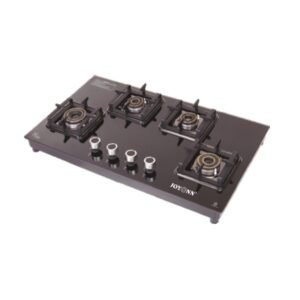
Gas stoves have traditionally been cheaper at the point of purchase, and that’s still broadly true at the entry level. A decent gas hob in the UK or India can cost anywhere from (or ₹3,000 to ₹15,000). A comparable electric induction cooktop typically starts a little higher, from around (₹5,000 to ₹25,000), though prices have fallen considerably as the technology has become mainstream.
If you’re switching from gas to induction, factor in the cost of replacing non-compatible cookware (more on that shortly) and any electrical rewiring your kitchen might need for a higher-amperage circuit. These are real costs — they’re just one-time investments.
Operating Costs
This is where induction reclaims ground. Because it uses energy so efficiently, your monthly cooking-related electricity costs are typically lower than equivalent gas usage, especially as gas prices have risen sharply across Europe and parts of Asia. In the UK, many households who switched to induction during the 2022–23 energy crisis found their kitchen energy costs stayed broadly stable or reduced because of the efficiency gain, even with higher unit electricity rates.
Maintenance
Gas stoves have more parts that can fail or need cleaning: burner rings, ignition systems, and grates all require regular attention. Induction cooktops have a smooth glass-ceramic surface that wipes clean in seconds. There are no crevices for spilled curry to hide in. Over a five-to-ten-year horizon, maintenance costs for induction are typically lower — provided you avoid cracking the glass surface with heavy pots.
Performance and Cooking Experience: Where Does Each Actually Shine?
Response Time and Heat Control
One of the most consistent surprises for new induction users is the responsiveness. An electric induction cooktop can go from a rolling boil to a gentle simmer in seconds — faster, in practice, than most gas burners. Precision temperature control, once the exclusive domain of professional gas ranges, is now matched or exceeded by high-end induction models.
For tasks like making a delicate béchamel, tempering chocolate, or holding a risotto at a consistent simmer, induction is genuinely outstanding.
Heat Distribution
Induction heats the base of the pan evenly, provided the pan is the right size for the cooking zone. Gas flames, by contrast, can create hot spots — particularly at the centre — which experienced cooks learn to manage through technique. For searing, wok cooking, and charring, gas still has an edge simply because the flame wraps around the pan and heats the sides too.
Cookware Compatibility
This is the one area where gas wins without argument: it works with everything. An electric induction cooktop requires magnetic cookware — cast iron, most stainless steel, and induction-specific pans. Aluminium, copper, and glass won’t work unless they have a magnetic base. A simple test: if a fridge magnet sticks firmly to the bottom of your pan, it’ll work on induction.
Practical Tips for Switching to an Electric Induction Cooktop
Thinking of making the switch? Here’s what to actually prepare for:
- Check your cookware before buying. Test pots and pans with a magnet. You may be surprised — many modern stainless steel sets are already compatible.
- Budget for an electrical upgrade if needed. Freestanding induction ranges typically require a dedicated 32–40A circuit. Get an electrician to assess your current setup.
- Start with a portable induction hob. Before committing to a full built-in installation, a single-ring portable unit (available from ₹3,200–₹6,400) lets you experience induction cooking at virtually no risk.
- Use the right pan size. Most induction cooktops won’t activate if the pan is too small for the zone. Match your pan diameter to the zone for best performance.
- Clean spills promptly. The glass surface is easy to clean but can stain if sugary substances are left to cool and harden on it.
Pros and Cons at a Glance
Electric Induction Cooktop
Pros:
- Energy-efficient (85–90% heat transfer)
- Faster heating and precise temperature control
- Safer surface — stays cool to the touch
- Easy to clean, no crevices or grates
- Better for indoor air quality
- Lower long-term operating costs
Cons:
- Requires compatible magnetic cookware
- Higher upfront cost in some ranges
- Needs electricity to function (no use during power cuts)
- Glass surface can crack if struck by heavy pots
Gas Stove
Pros:
- Works with any cookware
- Familiar cooking experience
- Functions without electricity
- Better for wok cooking and open-flame techniques
- Generally lower upfront cost
Cons:
- Lower energy efficiency (40–55%)
- Open flame safety risks
- Indoor air quality concerns
- More cleaning effort required
- Higher long-term operating costs as gas prices rise
Busting Common Myths About Induction Cooking
“Induction cooking isn’t as fast as gas.” Actually, water boils faster on an electric induction cooktop than on most domestic gas burners. Tests by consumer organisations in the UK, US, and Australia have consistently shown induction is quicker.
“You need to buy all new pots and pans.” Not necessarily. Many existing stainless steel pans are induction-compatible. Do the magnet test before replacing anything.
“Induction isn’t suitable for serious cooking.” Tell that to the Michelin-starred restaurants that have switched. Induction is now the preferred cooking surface in many professional kitchens precisely because of its precision and consistency.
“Induction is expensive to run.” In most markets, the efficiency gain offsets the cost of electricity versus gas, especially at current gas prices. Calculate your own costs using your local tariffs.
FAQ: Electric Induction Cooktop vs Gas
Can I use a cast iron pan on an induction cooktop?
Yes — cast iron is one of the best materials for induction cooking. It heats evenly and retains heat exceptionally well.
Does an electric induction cooktop use a lot of electricity?
It uses electricity efficiently. Because so little energy is wasted as ambient heat, the actual energy consumed per cooking task is typically lower than gas equivalents.
Is induction safe for homes with pacemakers?
People with pacemakers should consult their cardiologist before using induction appliances, as the electromagnetic field could theoretically interfere with some devices. This is a genuine precaution worth checking individually.
How long does an induction cooktop last?
With proper care, a quality electric induction cooktop typically lasts 8–15 years. The glass-ceramic surface is durable but should be protected from heavy impacts.
Can I still char and blister food without a gas flame?
You can achieve high-heat searing on induction, but open-flame charring — for peppers, flatbreads, or the edges of meat — isn’t replicable on any electric surface. A kitchen blowtorch can bridge the gap for specific techniques.
Conclusion: Which Should You Choose?
For most modern households, an electric induction cooktop is the smarter long-term investment. It’s safer, cleaner, more efficient, and increasingly cost-effective as gas prices rise and electrical grids get greener. If you cook with precision — sauces, grains, delicate proteins — the temperature control alone may change how you cook.
Gas still has genuine appeal for open-flame techniques, households in areas with unreliable electricity, and cooks who simply love the tactile experience of a visible flame. It’s not obsolete — it’s just no longer the default best choice it once was.
The best next step? If you’re curious about induction but not ready to commit, pick up a portable single-ring induction hob and cook on it for two weeks. That real-world experience will tell you more than any article can.
About the Author This article was written by a home cooking enthusiast and kitchen technology researcher with over a decade of experience evaluating consumer appliances, contributing to consumer advocacy publications, and helping households make evidence-based decisions about kitchen equipment. All performance claims reference publicly available studies and consumer organisation testing data.